
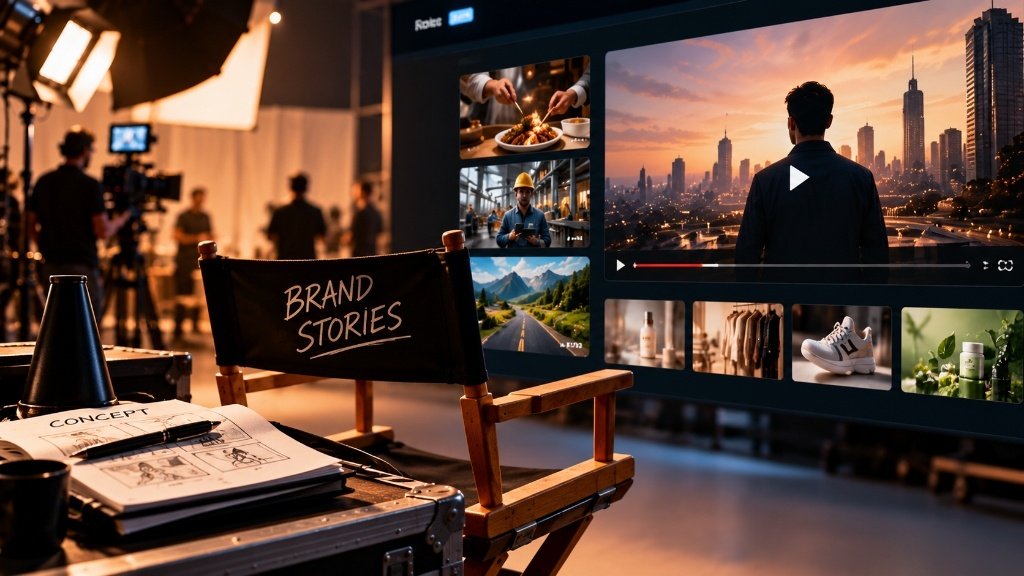
What if your brand could do more than appear in an advertisement? What if it could become part of a story that people choose to watch?
That is the thinking behind OTT-style branded shows. Instead of relying only on short advertisements, brands can invest in original entertainment, documentary series and episodic content that communicate their expertise, innovation, products and purpose through storytelling.
For businesses in India, a brand-funded OTT show can create an opportunity to build a deeper connection with audiences while showcasing what makes the organisation distinctive. However, success depends on more than securing a streaming platform or producing a visually impressive film. It requires a clear brand objective, a compelling narrative, the right production strategy and a distribution plan that extends beyond the original release.
So, how can a brand create an OTT-style show that audiences find worth watching and that marketing leaders can justify as a business investment?
Let's break it down.
What Is an OTT-Style Branded Show?
An OTT-style branded show is an entertainment or informational programme developed, sponsored or funded by a brand, with storytelling designed to serve both audience interests and business objectives.
Unlike a conventional advertisement, which typically communicates a product benefit or promotional message directly, a branded show builds a narrative around a subject relevant to the brand.
Depending on the objective, the format could be:
- A business documentary series showcasing manufacturing, engineering or innovation.
- A founder-led series exploring entrepreneurship, leadership and business growth.
- An expert-led show that makes complex industry topics easier to understand.
- A product or technology series demonstrating how products are designed, developed or used.
- A purpose-led series exploring sustainability, community impact or social initiatives.
For example, a manufacturing company could fund a documentary episode exploring how its products are engineered, tested and manufactured. Instead of simply listing technical specifications, the episode could follow the people, processes and decisions behind the finished product.
The brand remains central to the subject, but the story gives audiences a reason to engage.
The principle is simple: the brand provides the story with a meaningful foundation; the storytelling provides the audience with a reason to watch.
Why Are Brands Investing in Branded Entertainment?
Traditional advertising continues to play an important role in marketing. However, advertisements and entertainment serve different purposes. An advertisement can deliver a concise message, while a longer-form story can provide context, demonstrate expertise and explore a subject in greater depth.
This distinction makes branded entertainment in India relevant for organisations looking to communicate more than a product offer.
1. Build Brand Credibility Through Real Stories
A company may claim that its products are innovative, its processes are efficient or its people are highly skilled. A documentary-style show can demonstrate these qualities through real examples, expert interviews, facilities and behind-the-scenes footage.
For B2B companies, manufacturers and enterprises, this can help make complex capabilities more understandable to customers, investors, business partners and prospective employees.
2. Explain Complex Products and Processes
Some products and industries require more explanation than a short advertisement can provide.
Consider a company manufacturing industrial equipment. A conventional advertisement may highlight the equipment's features. An episodic documentary could explain the engineering challenges, research, precision and quality checks involved in producing it.
The result is a richer explanation of the company's expertise, provided the content is accurate, relevant and well produced.
3. Create Content With a Longer Useful Life
A branded show can generate assets beyond its original episode. Subject to usage rights and distribution agreements, a production may be repurposed into shorter videos, social media clips, website content, sales presentations, recruitment material and internal communications.
This creates additional opportunities to use the original investment across marketing and communications channels.
However, repurposing is not automatic. Usage rights, platform restrictions, talent agreements and editing requirements should be established during planning.
4. Connect Brand Visibility With a Meaningful Narrative
A logo placement can establish visibility, but it does not necessarily communicate why a brand matters.
A well-designed branded show connects the organisation to a subject it has the credibility to discuss. The association becomes more meaningful when the content demonstrates genuine expertise instead of repeatedly promoting the brand.
The objective is not to eliminate brand messaging. It is to make that messaging relevant to the story.
How to Create an OTT-Style Show for a Brand
Developing a successful brand-funded OTT show requires coordination between business strategy, editorial development, production and distribution. The following framework can help marketing leaders plan the process.
Step 1: Define the Business Objective Before Choosing the Format
Begin with the outcome the brand wants to achieve.
Is the goal to strengthen corporate reputation, explain a complex product, communicate innovation, improve stakeholder understanding or establish leadership in a particular industry?
Different objectives require different formats.
For example:
- Corporate reputation: A documentary showcasing the organisation's journey, values and operational strengths.
- Product education: A series explaining how a product works, what problems it addresses and how it is developed.
- Thought leadership: An expert-led programme exploring industry challenges and emerging developments.
- Employer branding: A people-focused series featuring teams, expertise and workplace culture.
- Sustainability communication: A documentary examining specific initiatives, processes and measurable progress.
The business objective should guide the creative brief, episode structure, distribution plan and measurement framework.
Without this clarity, a project can become an expensive production with no defined purpose beyond visibility.
Step 2: Understand the Audience and Its Viewing Interests
A show should be designed around the audience's interests, not just the brand's preferred messaging.
A CMO considering a brand-funded show should ask:
- Who is the intended viewer?
- What questions does this audience want answered?
- What does the audience already know about the subject?
- Which format would make the topic interesting and accessible?
- Where does the audience discover and watch this type of content?
For instance, a documentary about industrial innovation could appeal to business decision-makers, engineers, distributors, investors and prospective employees. Each group may be interested in a different aspect of the organisation.
Audience research helps identify the strongest narrative angle and prevents the show from becoming an internal corporate presentation disguised as entertainment.
Step 3: Develop a Story, Not an Extended Advertisement
This is one of the most important stages of branded show production.
A brand may have several messages it wants to communicate. The challenge is deciding which of those messages belong in the story and how they should be presented.
A strong narrative generally includes:
- A central question, challenge or idea.
- People whose experiences make the subject relatable.
- Evidence, demonstrations or real-world examples.
- A clear progression from beginning to end.
- A meaningful connection to the brand's expertise.
Imagine a company that manufactures electric mobility components.
A weak concept might present a sequence of product features, factory shots and executive sound bites. A stronger concept could follow the journey from an engineering challenge to the development, testing and application of a component, featuring the people and decisions involved.
The product remains relevant, but the narrative provides structure and momentum.
A useful editorial test: If the brand name were removed from the opening frame, would the subject still interest the intended audience? If the answer is no, the concept may need more work.
Step 4: Choose the Right Format and Episode Structure
The format should reflect the subject, audience, production resources and distribution strategy.
| Format | Best suited for | Example |
|---|---|---|
| Documentary series | Innovation, manufacturing and corporate reputation | The journey behind an everyday product |
| Founder-led series | Entrepreneurship and leadership | Decisions that shaped a business |
| Expert-led show | Complex industries and professional audiences | Conversations about healthcare or technology |
| Product-focused series | Product education and demonstrations | How a product moves from concept to testing |
| Purpose-led series | Sustainability and social impact | People and processes behind a verified initiative |
Episode length should be determined by the story and the intended platform, rather than by a universal rule. A tightly structured short episode may work for a focused topic, while a more complex subject may require additional time.
A production team should establish the format, episode length, language, host or presenter, visual treatment and editorial structure before filming begins.
Step 5: Integrate the Brand Without Disrupting the Story
OTT brand integration works best when the brand has a legitimate role in the subject being explored.
There are several ways to achieve this:
- Title sponsorship: The brand is prominently associated with the show.
- Powered-by partnership: The brand supports the series and receives agreed visibility.
- Brand integration: The brand's product, expertise or solution appears naturally within the narrative.
- Product placement: The product appears in a relevant setting or scene.
- Co-created branded content: The brand and production partner develop a custom programme around agreed objectives.
These models offer different levels of visibility and editorial involvement. The right choice depends on the brand's goals, budget, distribution arrangements and the nature of the content.
The important distinction is between being visible and being relevant. A brand should have a clear reason to appear in the programme, and its claims should be supportable.
Step 6: Plan Production for Quality, Authenticity and Accuracy
Premium storytelling requires more than attractive visuals.
The production plan should cover research, scripting, interviews, locations, filming permissions, equipment, sound, lighting, editing, graphics, music and quality checks.
For documentary-led branded entertainment, access to real people, facilities and processes can be particularly valuable. Authentic details help audiences understand the subject and give the story credibility.
Production teams should also verify technical claims, obtain appropriate releases, protect confidential information and secure the necessary rights for footage, music, archive material and other assets.
For a manufacturing documentary, for example, the team should confirm process details with subject-matter experts before finalising the script. Visual storytelling should make the facts easier to understand, not simplify them to the point of inaccuracy.
Step 7: Choose Distribution Before Production Is Complete
A strong show needs a realistic route to its intended audience.
OTT distribution may provide a premium viewing environment, but a streaming placement alone does not guarantee viewership, engagement or business impact.
The distribution strategy should specify:
- The intended streaming or publishing platform.
- Audience and content suitability requirements.
- Placement, promotion and discoverability arrangements.
- Language and localisation requirements.
- Social media and digital amplification.
- Approved secondary uses of the content.
A show may also be supported through short-form clips, YouTube, company websites, professional social networks, PR and sales communications, subject to the relevant rights and agreements.
Distribution should therefore be treated as part of the original strategy rather than a task that begins after the final edit.
Step 8: Measure Outcomes Against the Original Objective
The success of a brand-funded OTT show should not be judged by views alone.
A useful measurement framework separates audience performance from brand and business outcomes.
| Objective | Potential metrics |
|---|---|
| Reach and awareness | Unique viewers, reach and impressions |
| Content engagement | Average watch time, completion rate and repeat viewing |
| Brand consideration | Relevant pre- and post-campaign survey measures |
| Digital interest | Website visits, branded search trends and qualified enquiries |
| Business development | Leads, sales conversations and influenced opportunities |
| Content efficiency | Cost per engaged viewer and reuse of approved assets |
The appropriate metrics depend on the distribution platform, available data and campaign design. For example, a platform may not share all viewing or audience-level information with a brand partner.
Where possible, establish a baseline before launch, define reporting periods and distinguish correlation from causation. An increase in website traffic after a show goes live does not, by itself, prove that the show caused the increase.
A clear objective, a credible measurement plan and realistic attribution are essential to evaluating ROI.
A Real-World Model: Digikore Originals' Kaise Banta Hai
An example of this approach is Kaise Banta Hai, a business documentary series produced by Digikore Studios Ltd.
The series explores the innovation, engineering, craftsmanship and people behind products and organisations. Its subject matter is particularly relevant to manufacturing, automotive, consumer goods, engineering and industrial businesses that want to communicate the work behind their products.
According to the series' official website, Kaise Banta Hai has completed three seasons featuring more than 30 brands. Its published format includes brand-specific episodes of approximately 12–14 minutes, with distribution on JioHotstar and additional amplification opportunities.
What makes this model relevant to brand-funded storytelling is its editorial approach: the organisation is presented through its products, processes, people and expertise rather than through a conventional product advertisement alone.
For example, an industrial company could use this format to demonstrate its manufacturing capabilities, explain an engineering process or showcase the expertise behind a product. A consumer brand might focus on product development, craftsmanship or quality control.
The specific narrative would depend on the organisation and the evidence available to support its story.
For brands evaluating documentary-led entertainment, Kaise Banta Hai offers a practical reference for how business subjects can be developed into an episodic storytelling format.
Explore the Kaise Banta Hai series and brand partnership opportunities to understand how this model could fit your organisation's objectives.
Common Mistakes to Avoid When Creating a Brand-Funded Show
Even a well-funded production can underperform if its strategy is weak. Marketing teams should watch for five common mistakes.
- Treating the show like a long advertisement. Excessive promotional messaging can weaken the narrative and reduce the audience's reason to continue watching.
- Starting production without a defined objective. A show needs a clear purpose, intended audience and success criteria before creative development begins.
- Choosing a format only because it is popular. A celebrity-led entertainment format may not be suitable for explaining a technical manufacturing process. Format should follow the subject and audience.
- Assuming platform placement guarantees results. Distribution access, discoverability, promotion and actual viewership are different things. Each needs to be planned and evaluated separately.
- Ignoring content rights and reuse. If the brand wants to use episodes in recruitment, sales presentations or future campaigns, the necessary permissions should be addressed at the contracting stage.
Avoiding these mistakes makes the project more purposeful, measurable and easier to manage.
How to Choose the Right Branded Entertainment Partner
Creating an OTT-style show often involves multiple capabilities, from brand strategy and editorial development to filming, post-production and distribution coordination.
When evaluating a branded entertainment production partner in India, consider the following:
- Strategic understanding: Can the team translate your business objectives into a strong editorial concept?
- Storytelling expertise: Can it develop a narrative that works for viewers rather than simply reproducing a corporate brief?
- Production capabilities: Can it manage research, filming, post-production and quality control?
- Distribution clarity: Are platform access, placement, promotional support and usage rights clearly defined?
- Measurement and reporting: Can the team explain what data will be available and how success will be assessed?
- Relevant experience: Has the team worked with similar industries, audiences or content formats?
A good partner should be able to explain not only how the show will be produced, but also why the format suits the brand and how the finished content can support the wider marketing strategy.
At Digikore Originals, branded content, premium OTT storytelling and multi-platform distribution form part of the offering. Through its original productions and partnership models, brands can explore formats ranging from documentary storytelling to integrated brand partnerships.
The Future of Brand-Funded OTT Shows
The opportunity in branded entertainment is not simply to place more brand messages inside entertainment. It is to create content that gives audiences a genuine reason to spend time with a brand's subject matter.
For some organisations, that may mean a documentary about manufacturing excellence. For others, it could be an expert-led series, a founder story or a product-focused programme.
The strongest format will depend on what the organisation can credibly demonstrate, what the audience wants to understand and where the content can reach the right viewers.
For marketing leaders, the decision should come down to three questions: What story can our brand credibly tell? Who would want to watch it? And what business outcome should it support?
Answer those questions before production begins, and an OTT-style branded show can become more than a one-time campaign. It can become a reusable storytelling asset that supports brand communication across multiple touchpoints.
Frequently Asked Questions
1. What is the difference between a brand-funded OTT show and a traditional advertisement?
A traditional advertisement usually communicates a direct promotional message within a short format. A brand-funded OTT show uses a longer-form programme, such as a documentary or episodic series, to explore a subject connected to the brand. The brand may sponsor, fund or co-create the content, while the format provides room for deeper storytelling.
2. How can a company create an OTT-style show in India?
Start by defining the business objective and target audience. Develop a relevant story, select the right format, establish the brand integration model, plan production and confirm distribution arrangements. Finally, define measurable success criteria before launch. Working with an experienced production partner can help coordinate these stages.
3. How should brands measure the ROI of a branded OTT show?
Measure outcomes against the original objective. Depending on the campaign, this could include reach, viewing time, completion rates, brand consideration, website visits, qualified leads or influenced business opportunities. Establish a baseline and agree on available platform data in advance. Views alone are not sufficient to establish business ROI.
Create a Story Worth Watching
Your organisation has products, people, expertise and experiences that may deserve a bigger platform than a conventional advertisement.
The next step is to identify the strongest story and build a production and distribution strategy around it.
Explore branded entertainment and OTT storytelling with Digikore Originals. To discuss a potential brand-funded show or documentary partnership, visit the Kaise Banta Hai page and explore the available opportunities.